Thesis Project
Interaction Design
Learning through play
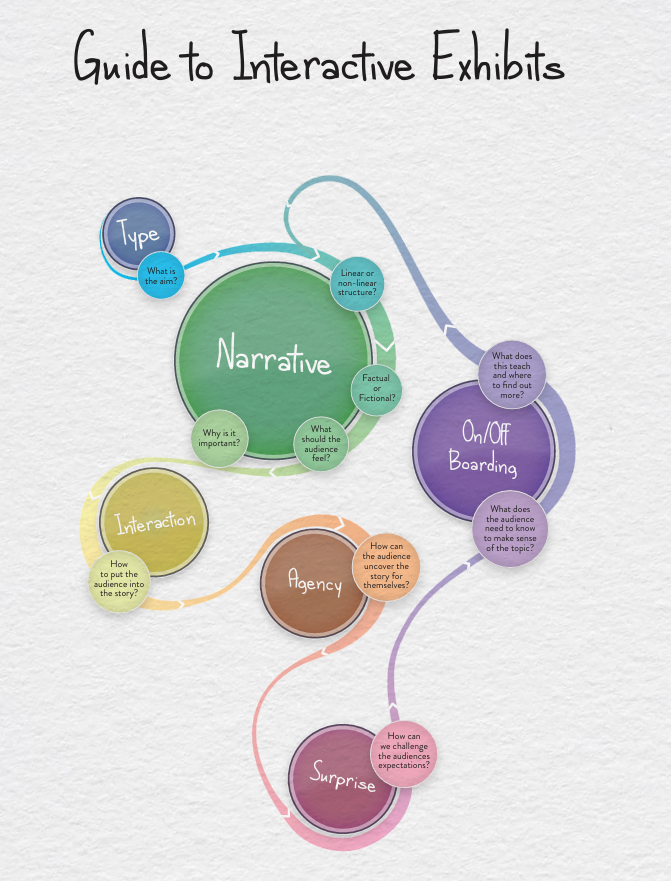
Decoding the principles behind interactive exhibitions, this framework aims to guide exhibiton design to be a narrative lead immersive experience beyond VR and AR
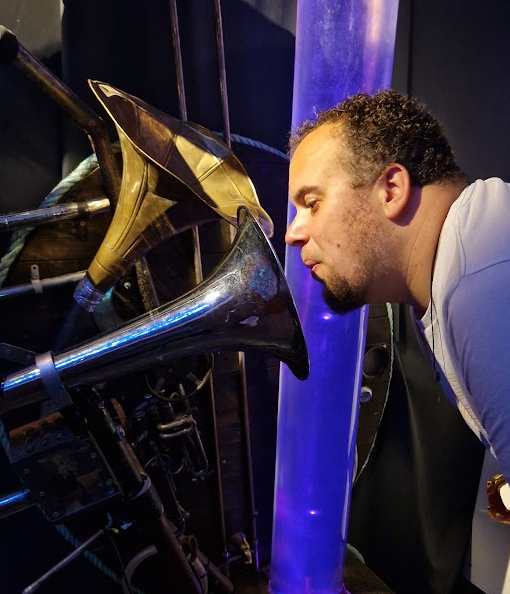
My research started at The Box Museum, watching how people actually moved through the space and what exhibits they chose to go to. The results were clear: people are drawn to physical objects, but they often lose interest in screens.
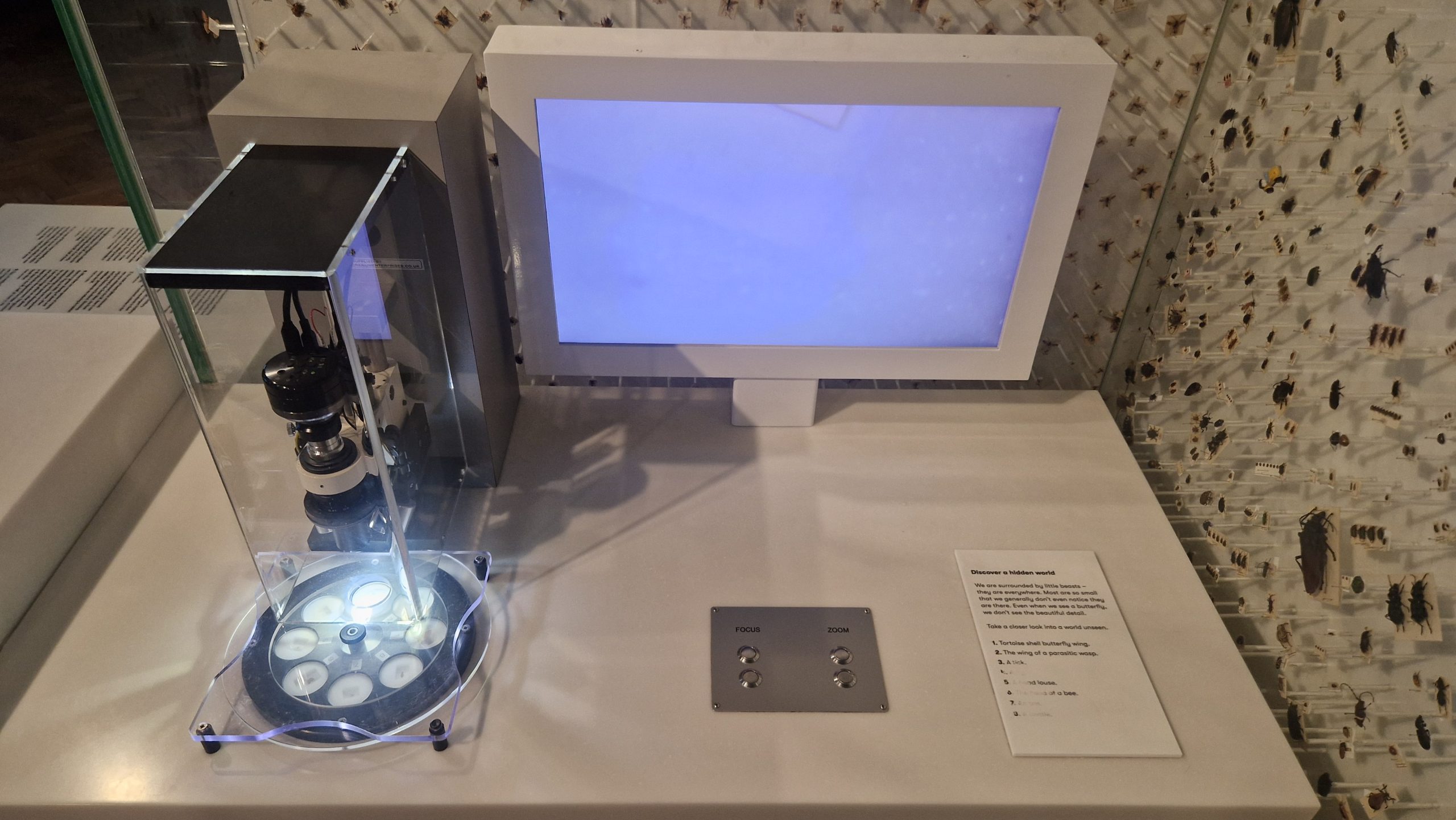
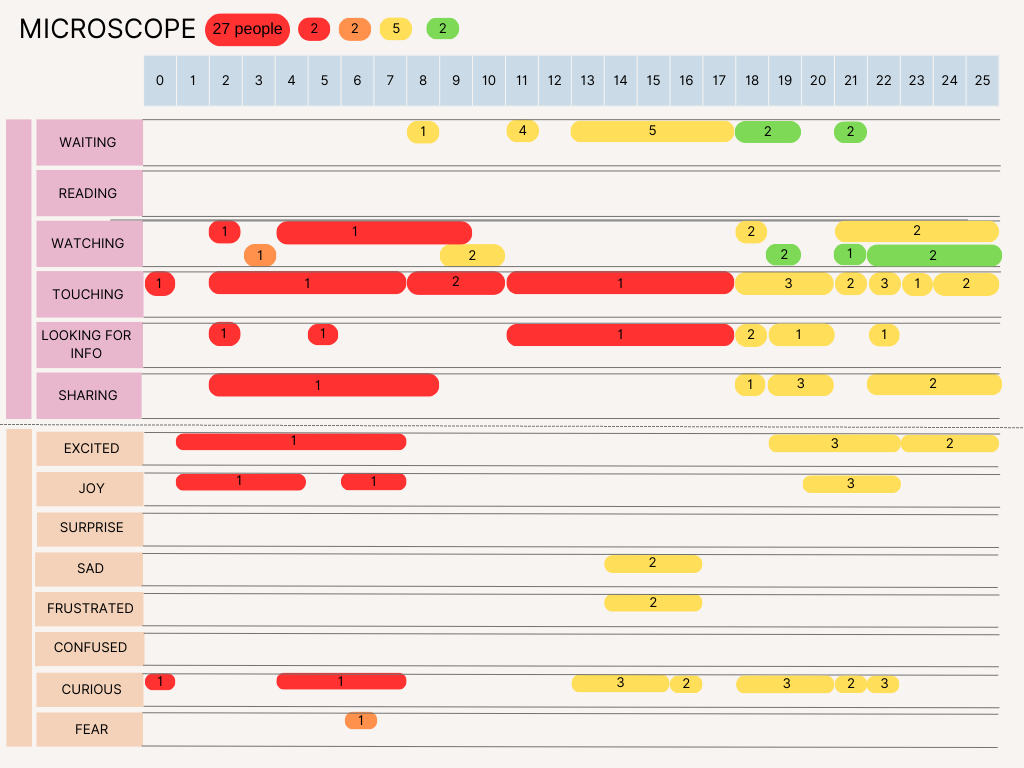
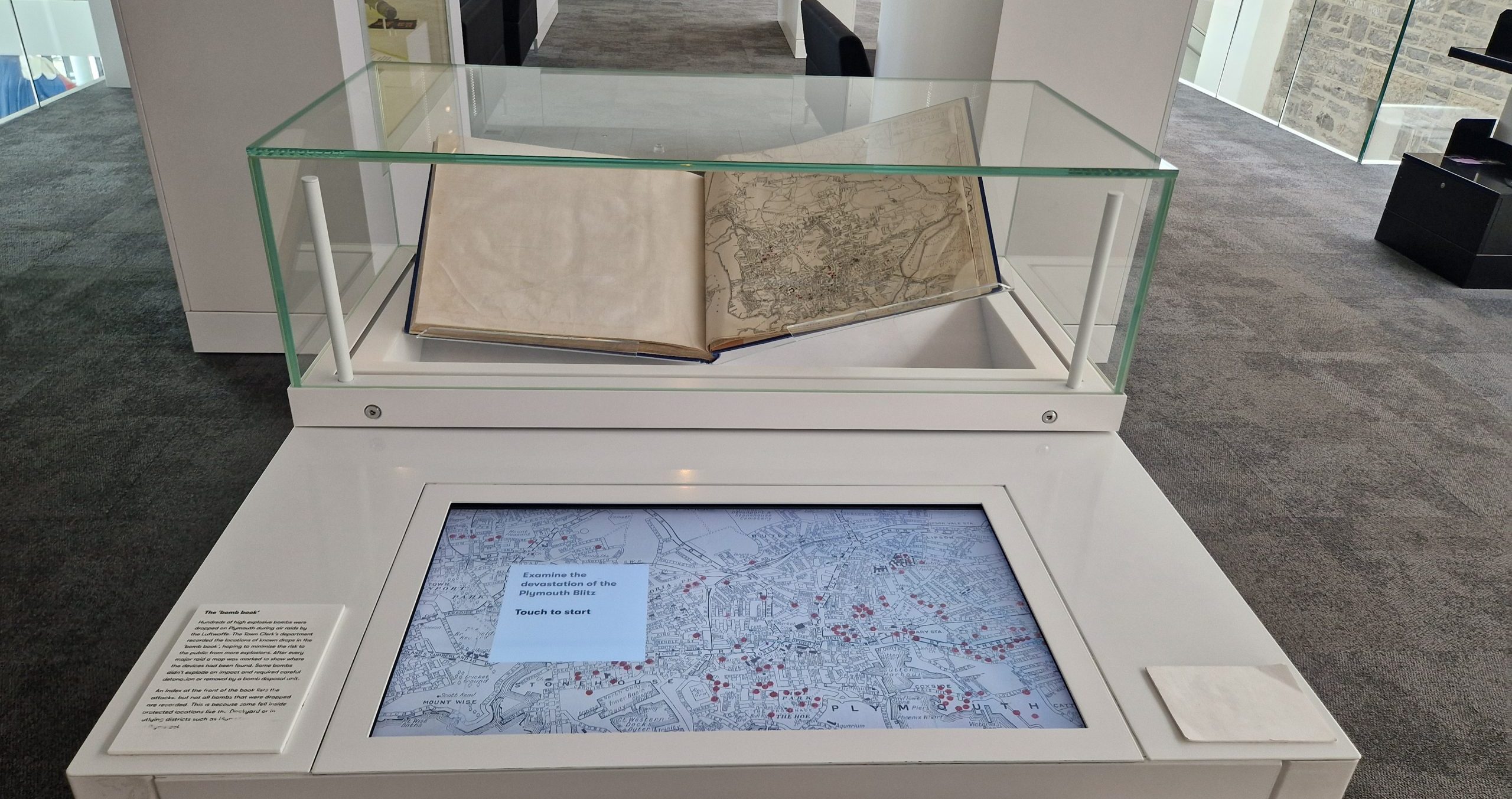
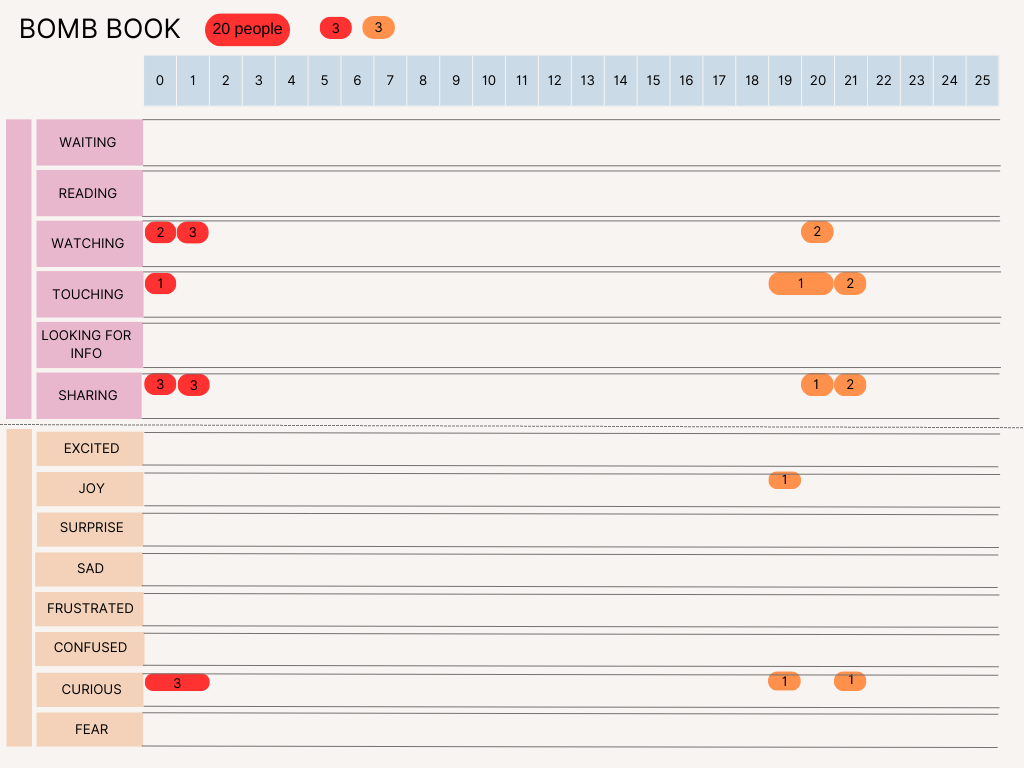
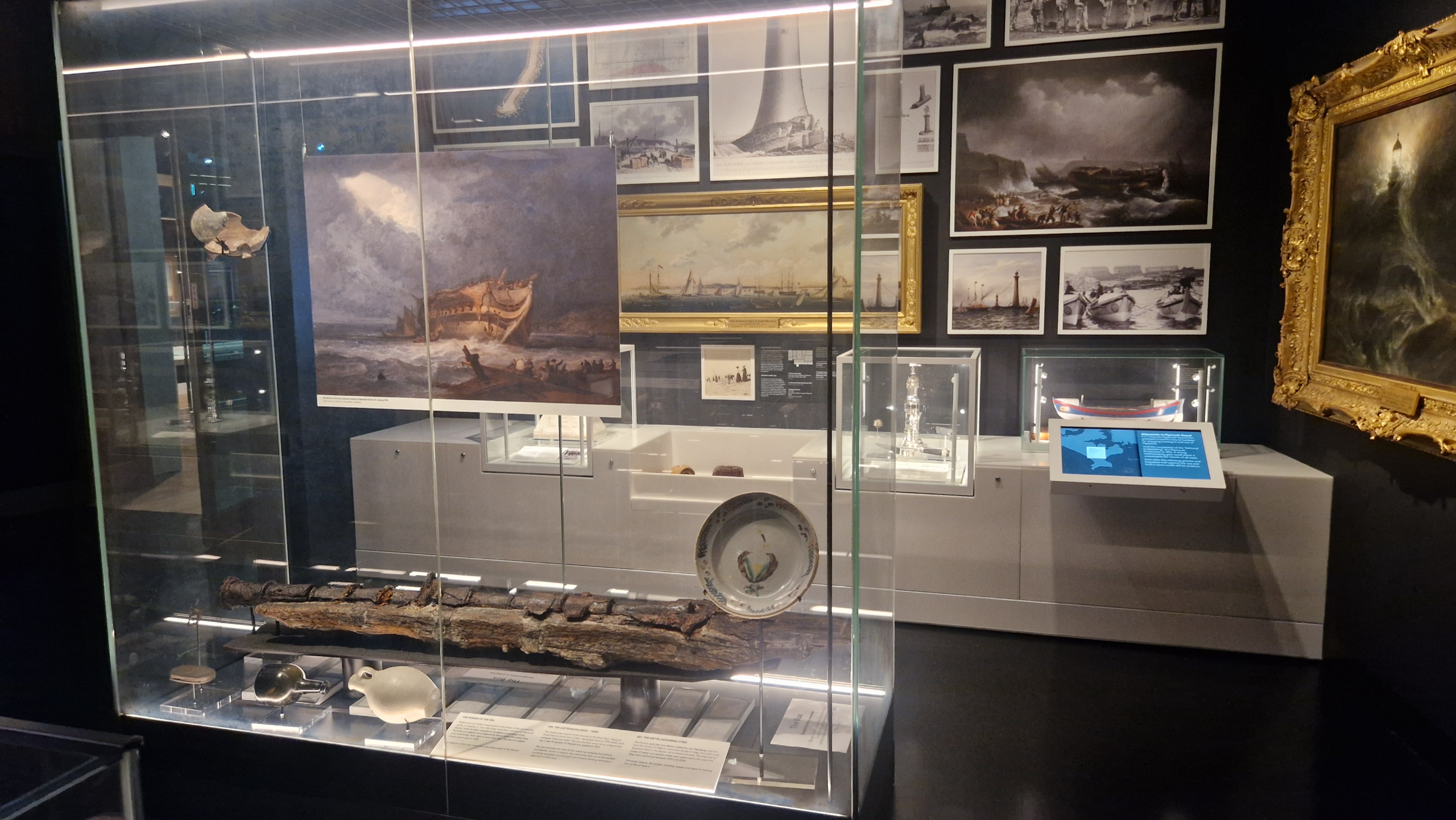
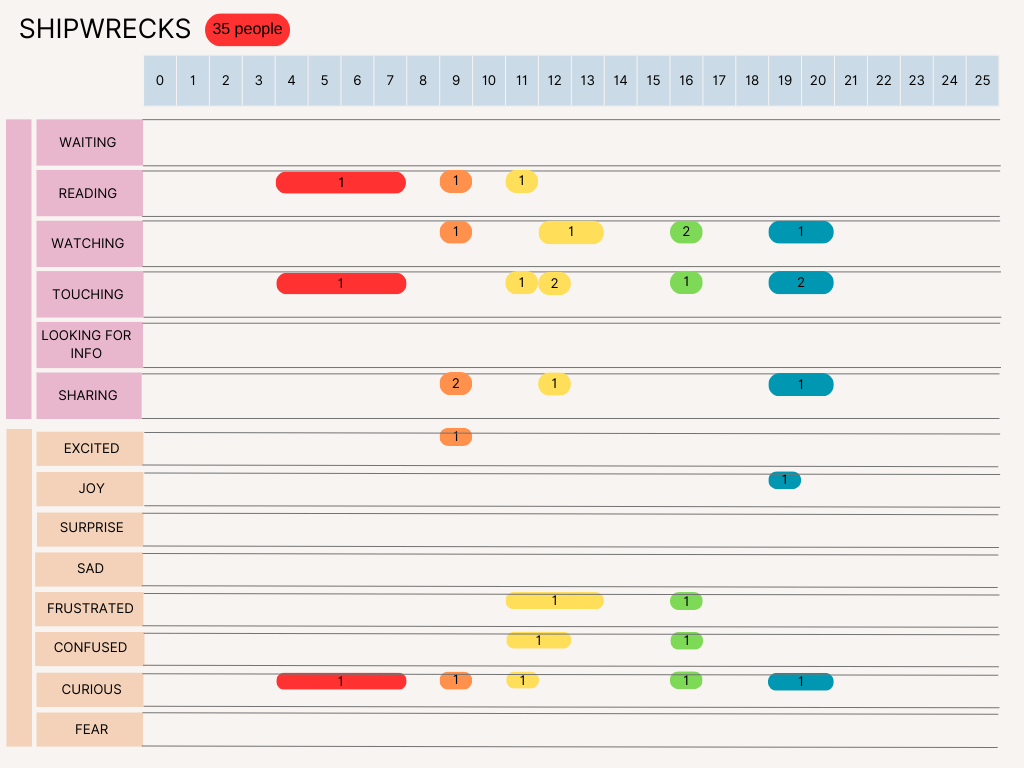
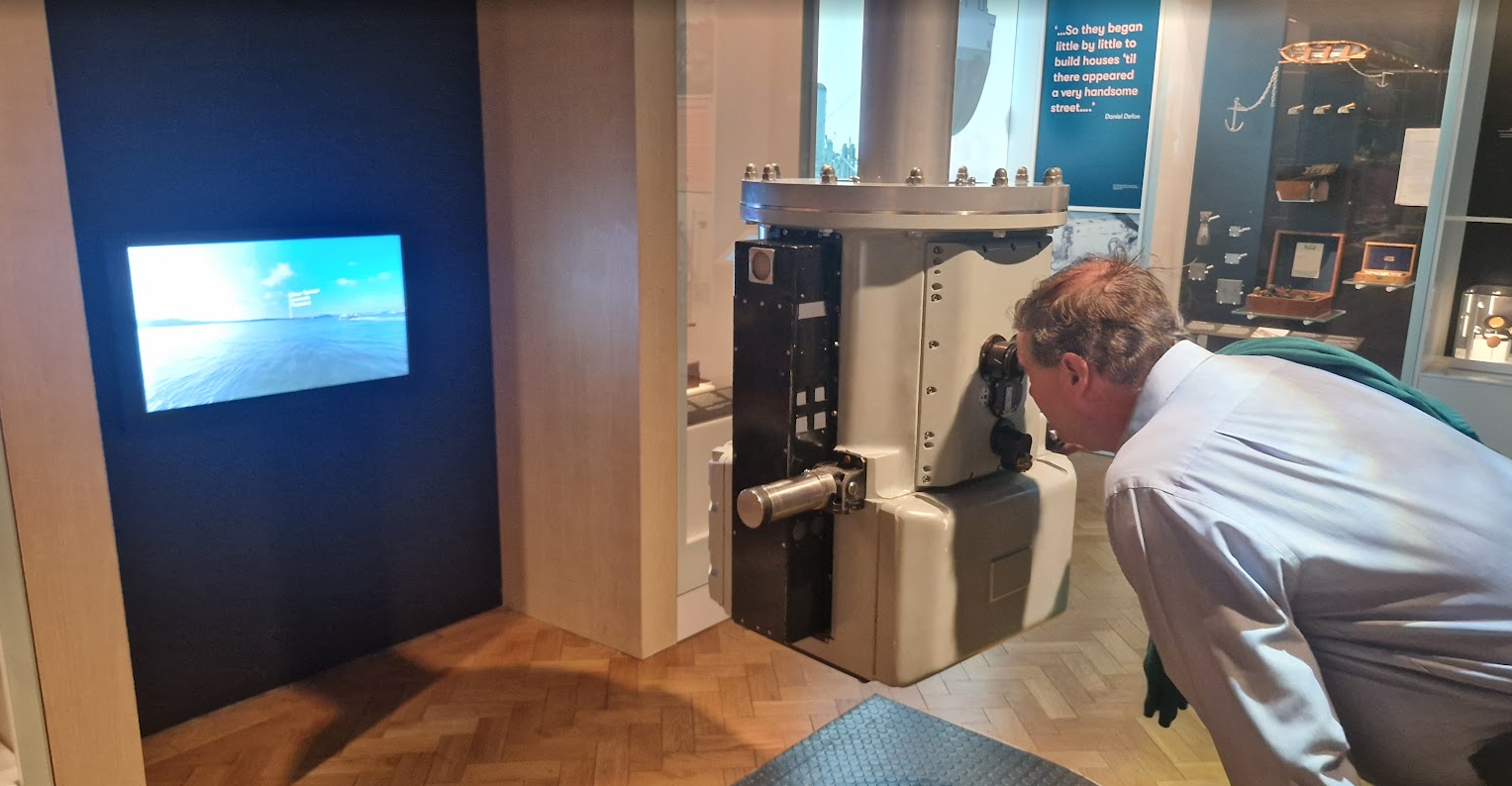
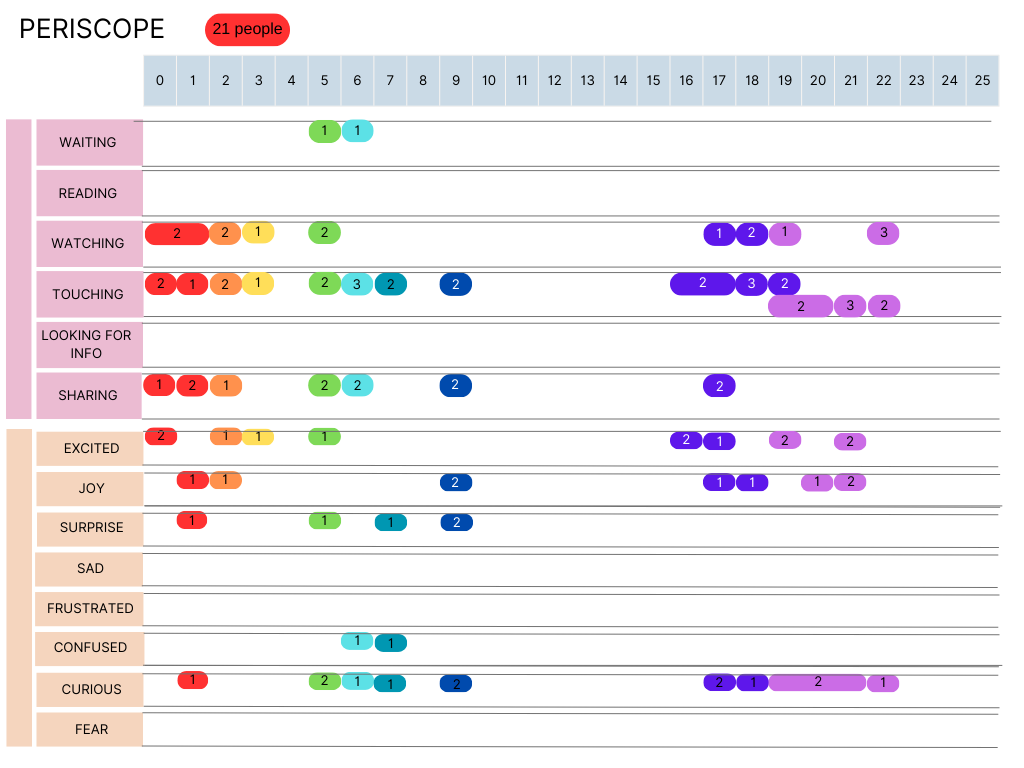
Using the four exhibits above as case studies, I looked to see what level of interaction they had during a set period of time. To establish this popularity, I looked at how long people were interacting with the exhibit and what sort of emotions were being displayed. The results of this were shown in chart, with the waiting time for the microscope exhibit being the biggest surprise and proof of interest.
The Microscope exhibit was by far the most popular. It comprises of a microscope with 4 samples that are in a rotating base at the bottom, and a butrton to zoom in and focus the lens. surrounding this space is a variety of butterfly and bug samples, that are set behind perspex.
The interactive nature of this exhibit gives really strong agency for the poeple interacting with with. From the chart, you can see the quantity of people watching is high as well as a long interaction being had.
The Bomb book was the only exhibit I looked at on the mezzanine floor, so there could be an element of footfall within these results, which is why I recorded how many people came into the spaces as well. Of the 20 people who entered the space only 6 interacted with the exhibit, and for very short lengths of time.
The Strategy Behind the Play
Digital archives told through modes such as videos and audio are rich, but they often lack ‘agency’.
How to switch things up:
-
Narrative is the Anchor: The narrative of the item has to be at the forefront of the exhibit, and the interactions should reflect the story at the heart of it. Otherwise, it’s just button-pressing.
- Agency over learning: through active participation, retention and interest in the topic soars. this is true across the generations as it feeds into the curiosity.
-
Closing the Loop: Engagement happens when your physical actions—turning a dial or moving an object—directly reveal a new part of the narrative.
- Context aids learning: On/Off boarding can change if the information can be accessed and how well it is retained at the end.
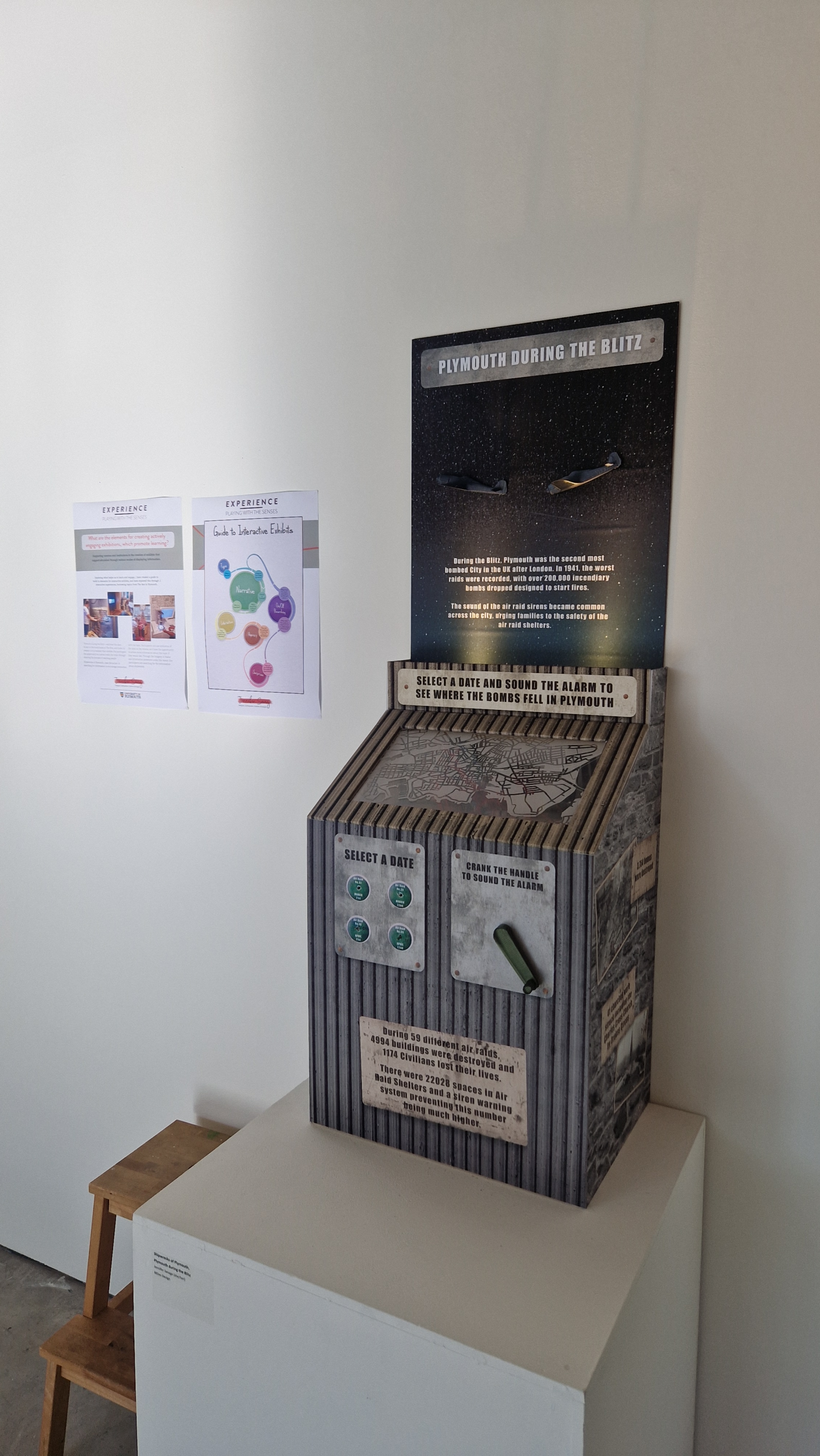
Bomb book – Applying it in the Creative Process
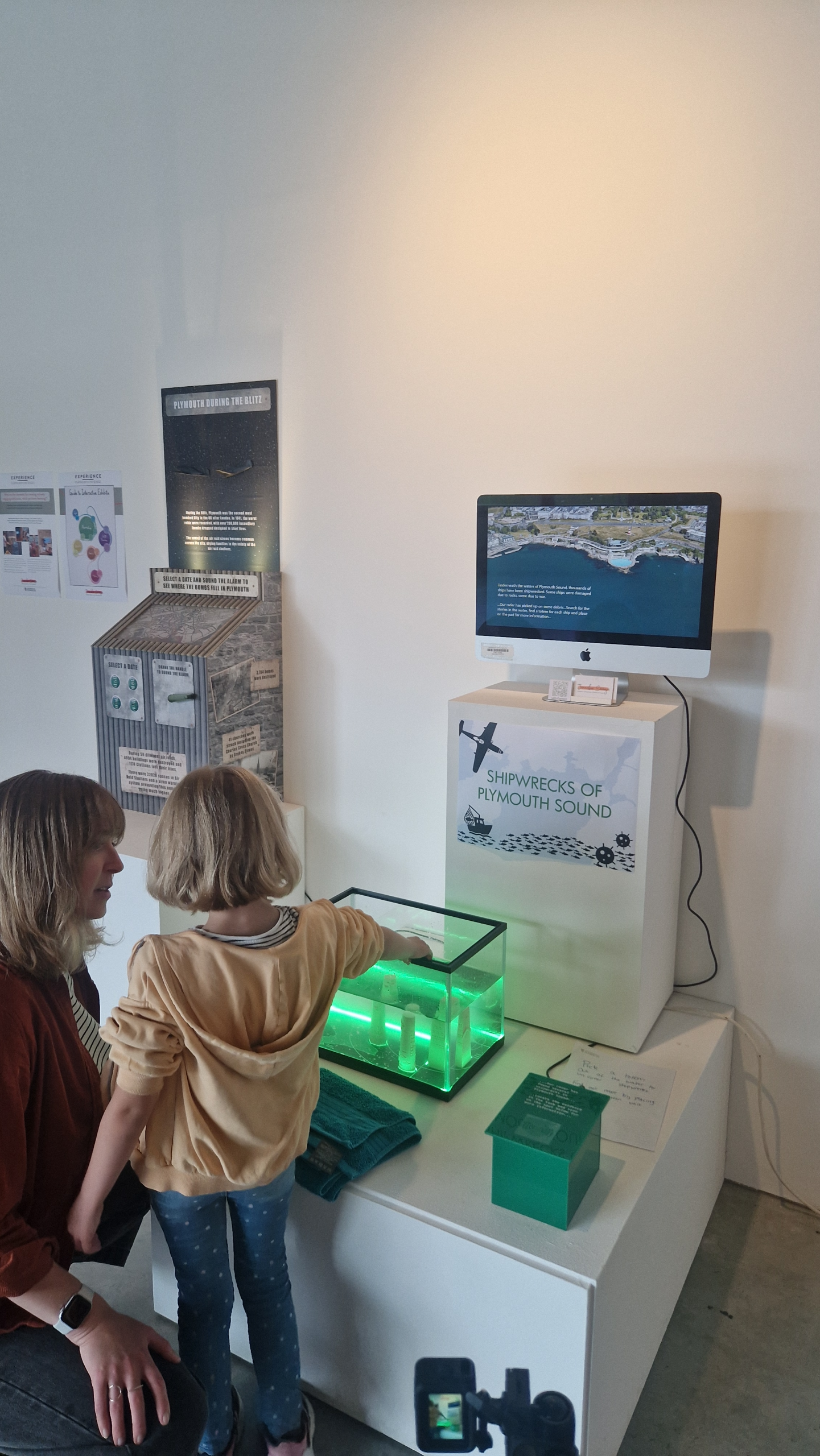
With the Bomb Book, the real challenge was finding a way to move past a static list of dates and connect people to the actual gravity of the Blitz. As I worked through the concept, I was constantly weighing up how to give visitors ‘Agency’ without making a tragedy feel like a game. It was important to me that the interaction didn’t just become a series of buttons to press, but a genuine tool for empathy that respected the history it was uncovering.
Narrative
When looking at the Blitz through the Bomb Book, I felt the narrative needed to move away from the book as just a ‘fragile object’ under glass. Instead of a reading exercise, I wanted the city’s footprint to be the focal point. The goal was to place the visitor in the position of a city monitor, making the historical record feel like an active, living part of the war effort rather than a distant archive.
Agency
The agency here is built around discovery that feels earned. Unlike a digital swipe, I wanted the visitor to have to work for the information. By using manual toggle switches to select specific dates, the audience chooses how much of the story they want to uncover, turning a passive observation into a self-directed search.
Interaction
While the Shipwreck interaction was about ‘diving,’ this is about ‘alerting’. I focused on the haptic feedback of a manual siren crank to really ground the experience. This physical onboarding uses the visitor’s own effort to pull them into the high-stakes atmosphere of the 1940s—making the alarm something they trigger themselves, not just a sound they hear.
Surprise
The surprise comes from the immediate, sensory reward of the light-mapped city. By connecting the siren crank to the LED indicators, the scale of the raids isn’t revealed all at once. The ‘Surprise’ here isn’t a game; it’s the visceral reaction to seeing the city timeline light up in direct response to your own physical action.
.
From this framework, I chose that the exhibit should:
- Show the data, but not as a static series of dots, but lights that are only present with other senses active.
- Involve the participant in the story, but try to avoid a game like nature due to the topic.
- Use the onboarding as an opportunity to get more people curious about what was there.
shipwrecks – applying the Creative Process
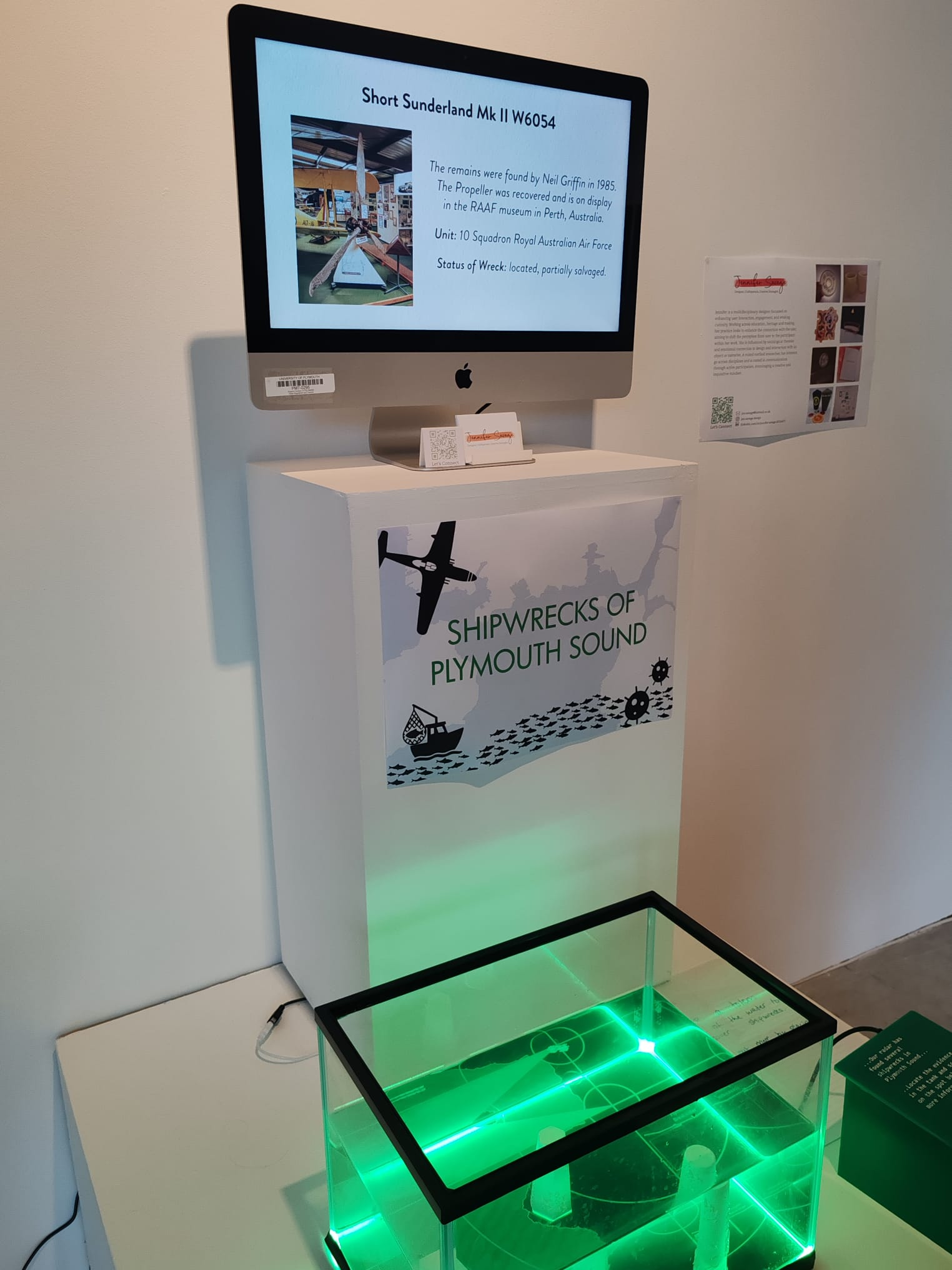
Applying the framework to this project, I sought to explore ways that the narrative of the lure in shipwreck diving could be shared in a controlled environment.
Narrative
In presenting this information, I felt the narrative should be from the point of view of the participant is the diver, searching the water for evidence of shipwrecks.
Agency
The agency within diving would be to see evidence of the wreck, and the choice to investigate it more or if you know enough. Further, you could research the item in more depth once it comes out of the water.
Interaction
Divers interact with the wrecks through sight, touch and other micro senses such as weight, coldness (that are associated through touch).
Surprise
The surprise element comes from not knowing what you are likely to see or discover – the answers are not always evident at the beginning. Linked to agency, the uncovering of the information yourself adds to the dyanmic of the experience.
From this framework, I chose that the exhibit should:
- represent diving as a way to contextualise the information that it was presenting
- involve the gamification of ‘hide and seek’ to discover new information
- have hints to the information, but allow you to find out more if you want

This project established a core principle of my practice—that the hand can lead the mind. It proved that when we give users physical agency over digital data, we don’t just increase engagement; we increase narrative retention.