Immersive Narratives
plymouth’s
bomb book
lifting history from the pages: using sensory design and agency to increase the impact and engagement for an event that shaped Plymouth
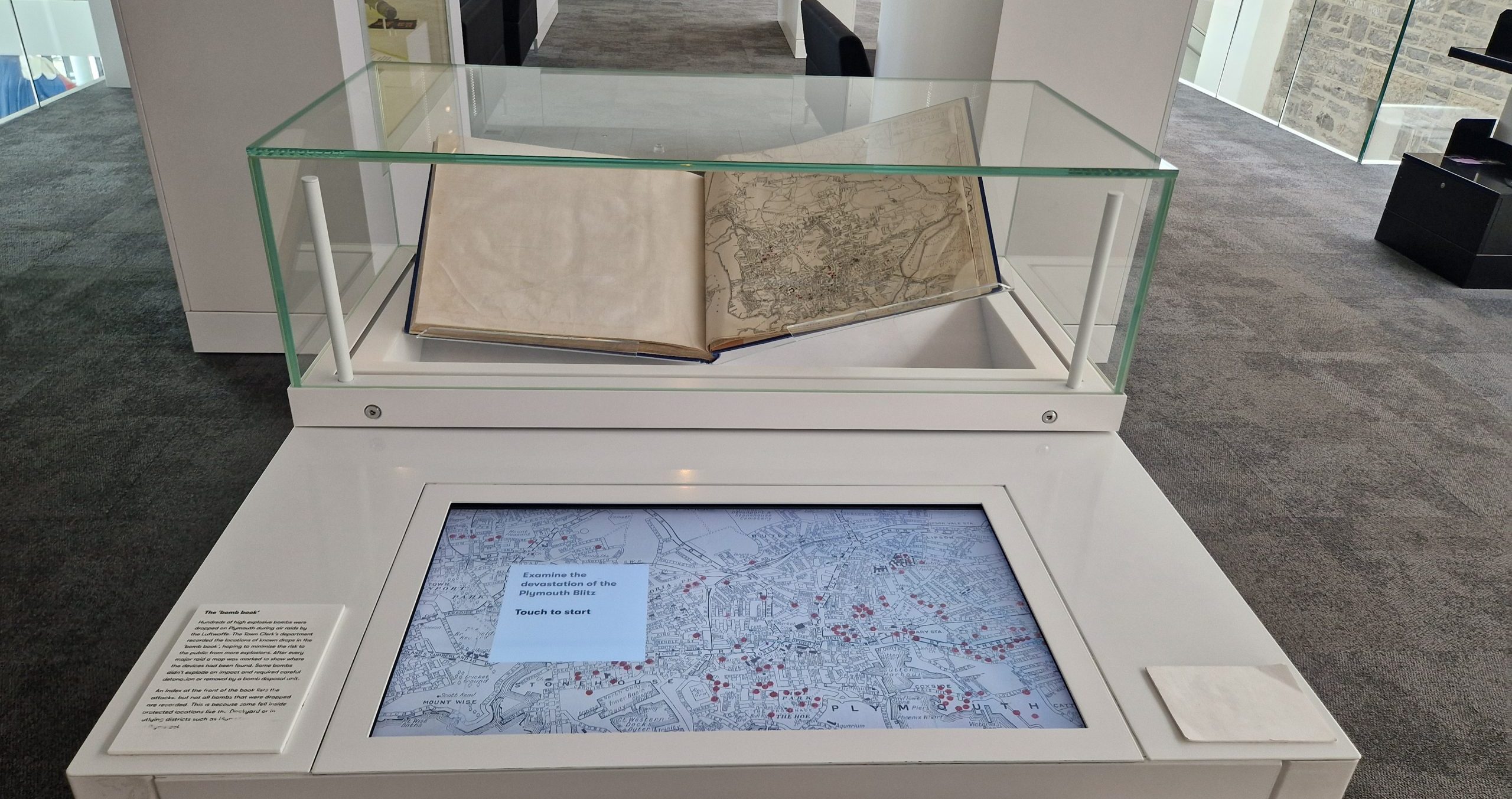
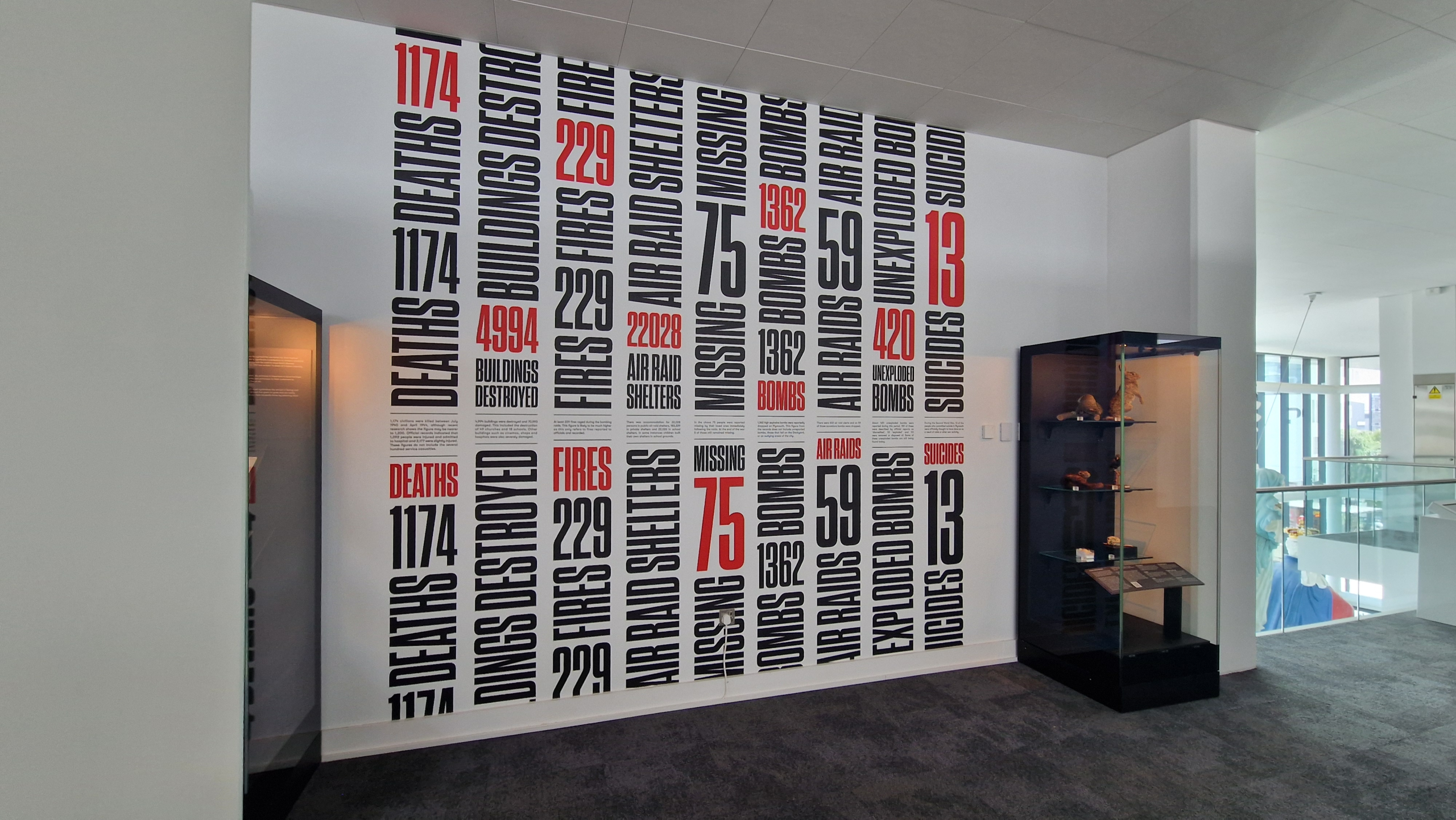
During the Blitz, Plymouth was reshaped by the raids on the naval dockyards at Devonport. It was a period of incredible intensity that left a permanent mark on the city’s footprint. Throughout it all, a meticulous ‘Bomb Book’ was kept—a night-by-night record of exactly where every single bomb fell. It’s a heavy, solemn piece of history that acts as a witness to that entire era.
The Problem:
With how vulnerable the book is, it’s kept under glass on the mezzanine at The Box. To let people explore it, the museum provided a touchscreen with high-res scans that you can swipe through, which is a nice nod to the flick of the original pages. But while the swiping motion is there, the feeling isn’t. Swiping a screen just doesn’t carry the weight of what’s actually being shown. I felt there was a real opportunity here to move past that ‘swipe and scroll’ habit and create something where the visitor could actually feel the gravity and the alarm of the Blitz through sensory-led discovery.
This project was born out of a simple observation: in museums, we’re surrounded by incredible stories, but we’re told not to touch them. I wanted to see if I could use ‘Smart Objects’ to break that barrier.
Often, the biggest barrier to interactive design is the fear that ‘touch’ leads to damage or theft. This project was an exercise in shifting that perspective. I proved that we don’t need to put the artifact at risk to create a visceral connection; instead, we can embed the digital heart of a story within a bespoke ‘Smart Object’ designed to be held, tested, and explored.
This isn’t just about cool tech; it’s a blueprint for how we can make learning feel like a personal discovery again.
The Response
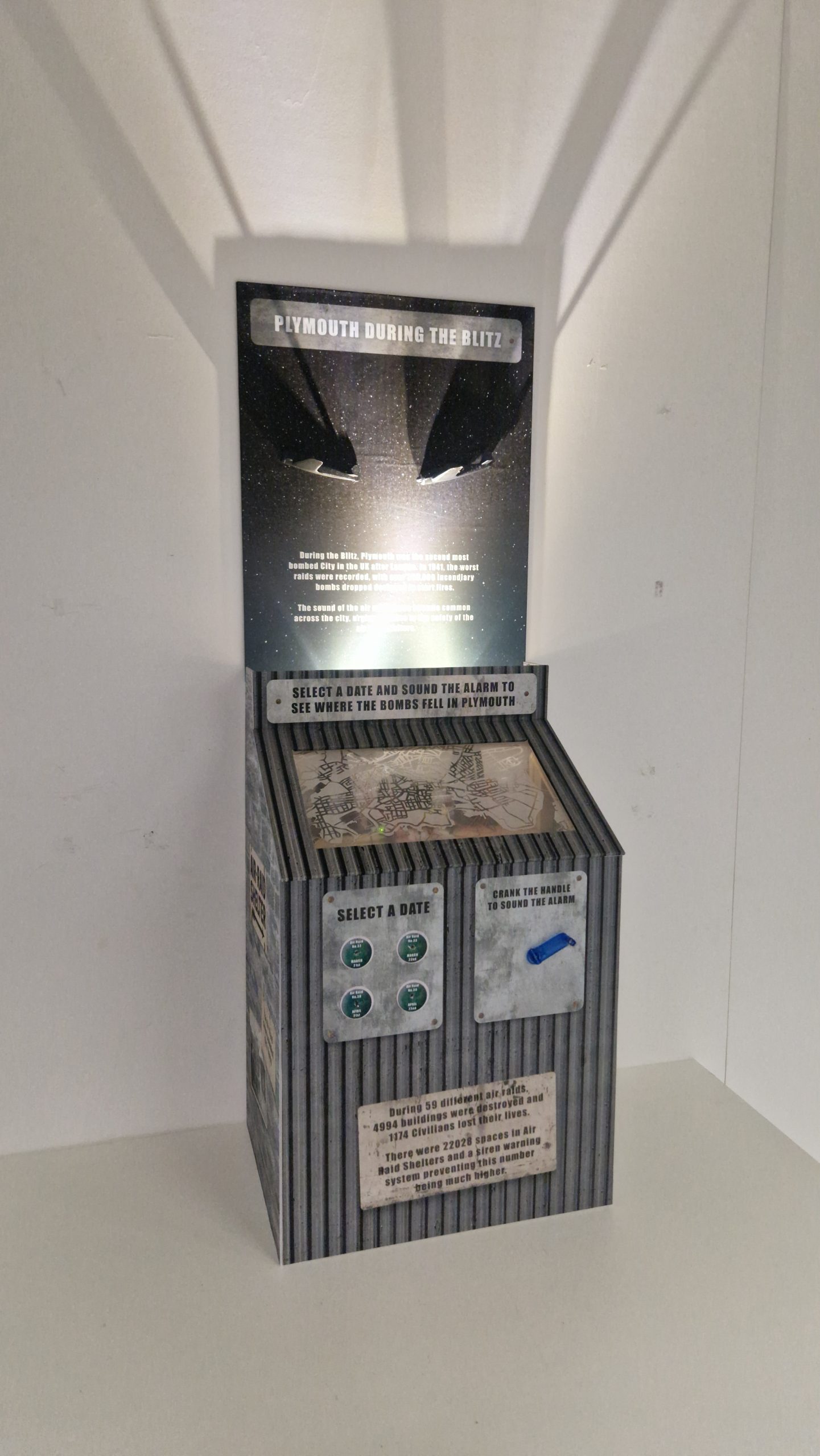
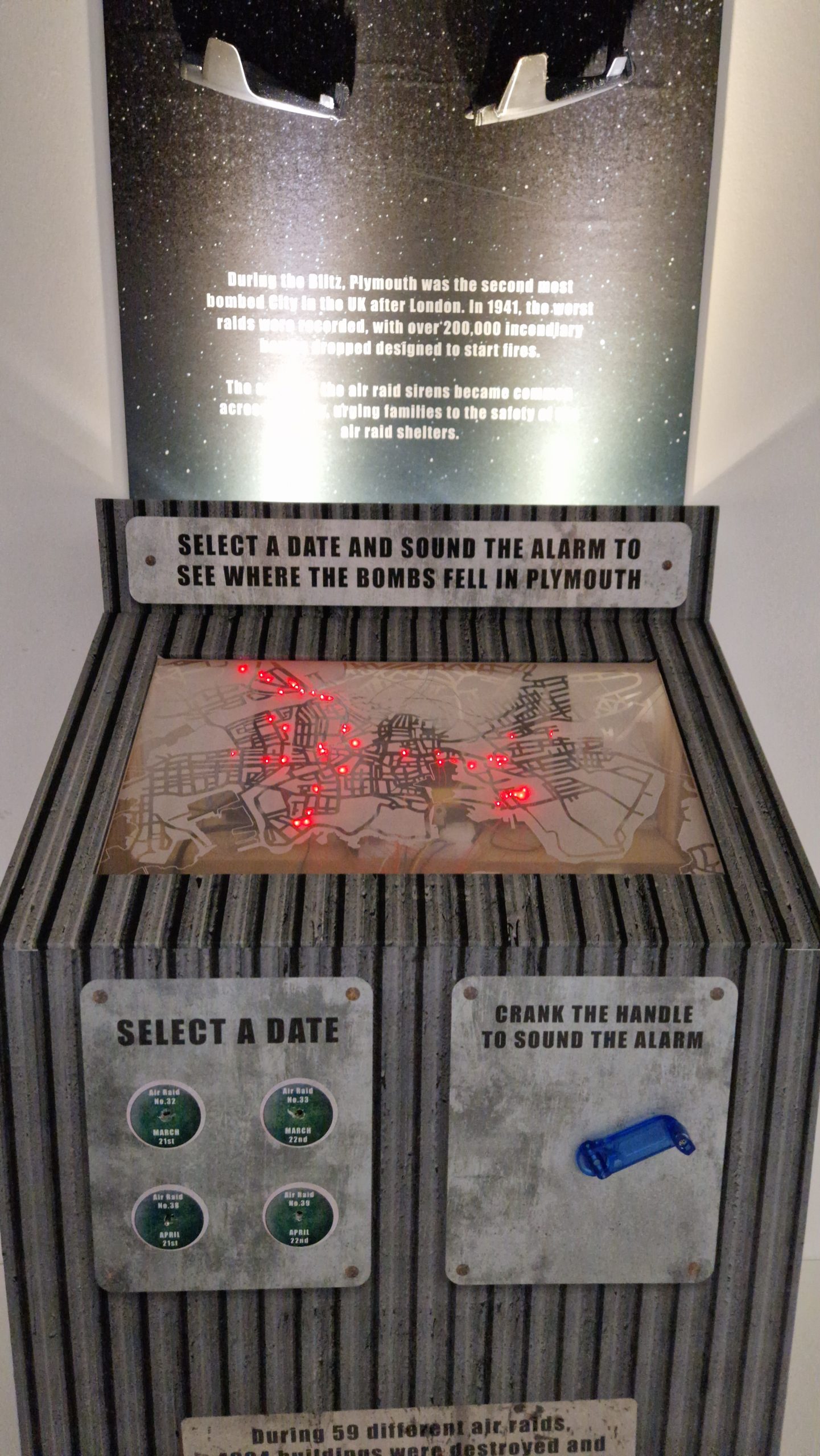
The exhibit pulls you in before you’ve touched anything. Two sweeping searchlights move across the back wall, catching the silhouettes of two half-relief plane shapes mounted to the surface — their shadows playing out exactly as they would have against a wartime sky. You’re drawn over before you’ve made a conscious decision to engage.
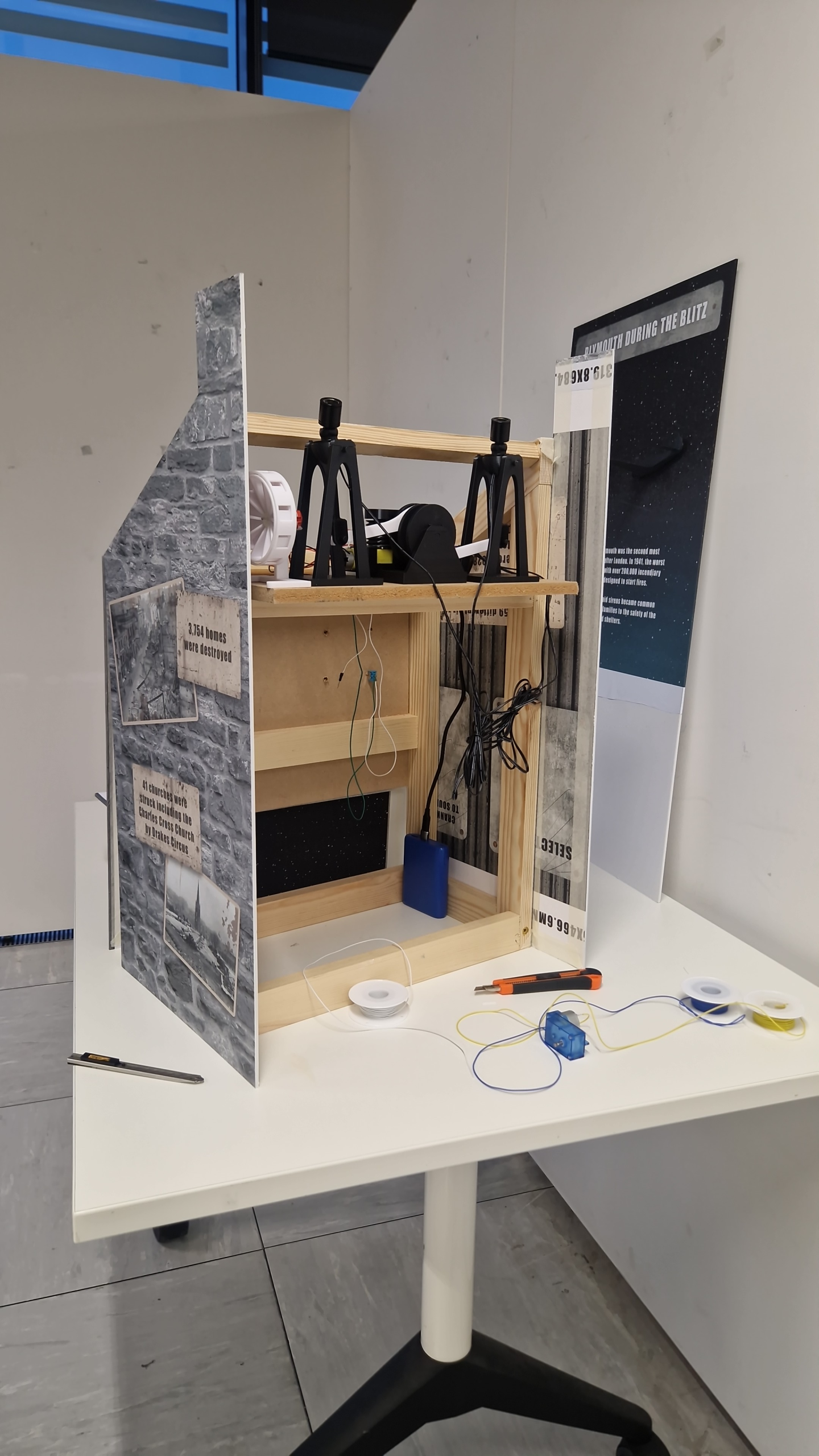
The structure is printed with a corrugated iron texture — an Anderson shelter aesthetic that places you inside that world immediately. In front of you is a slanted acrylic screen, laser-etched with a map of the city. The bomb locations are there — but hidden. You know something is coming. You just don’t know where or when.
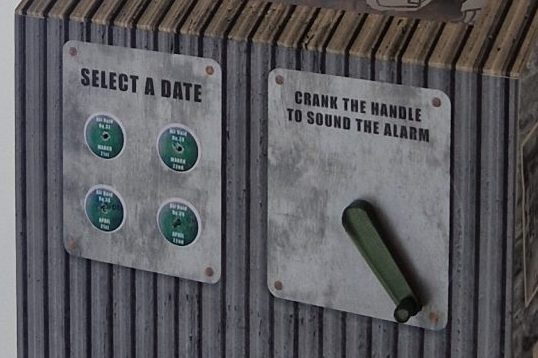
A toggle switchboard lets you select a date from the raids. Then you crank the handle — raising the alarm, sounding the air raid siren. At that moment the LED lights embedded in the map activate, marking exactly where the bombs fell that night. The city takes its hits in front of you.
The interaction doesn’t just show you what happened. It makes you the person sounding the alarm — and then makes you watch.
Making it come to life
From defining the narrative lens that the exhibit is focussed through, the making of the prototype developed though user testing and experimentation.
1. Framing the narrative
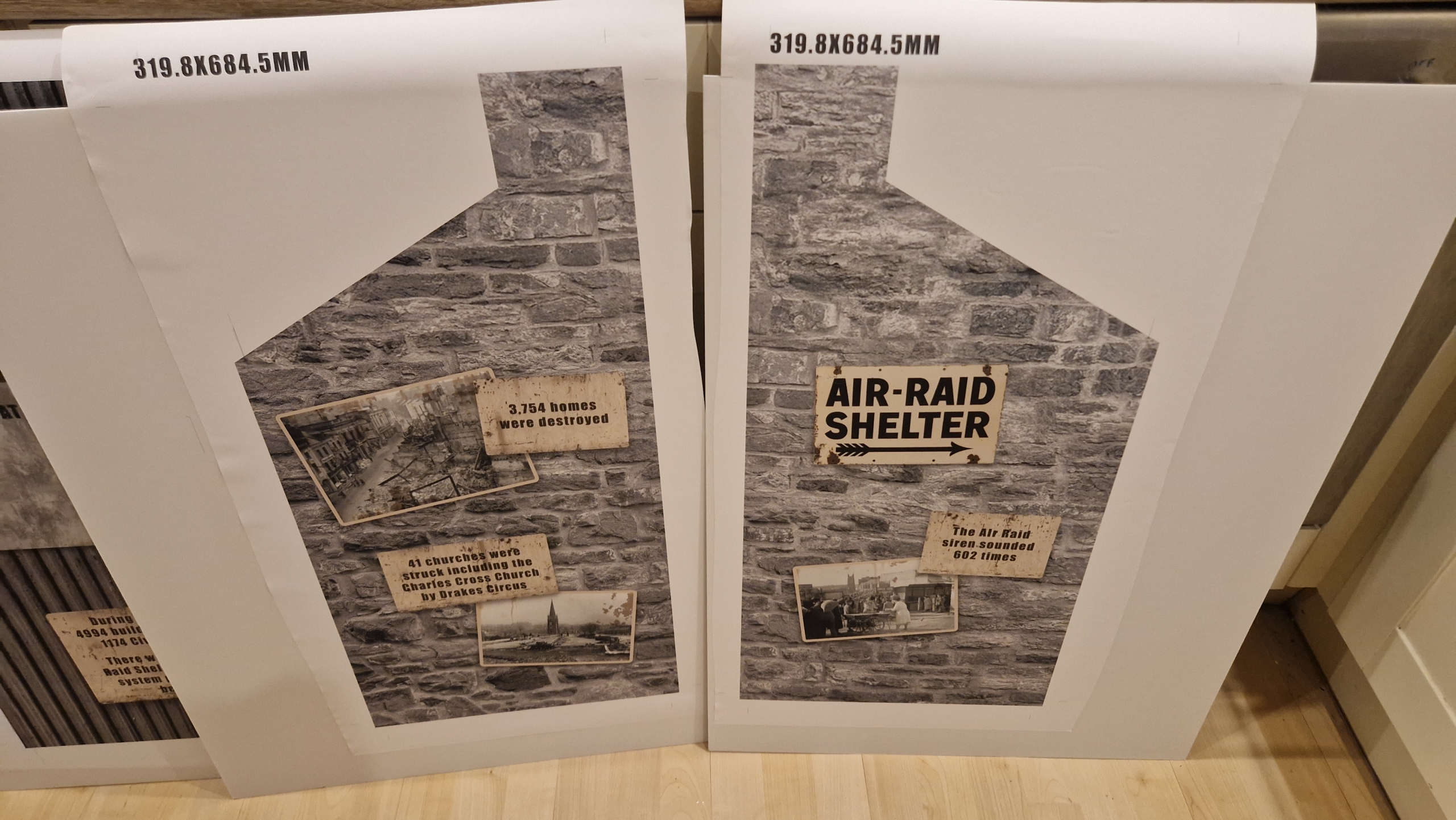
With a corrugated iron detail, this aesthetic mimics the air raid shelters of the Second World War. Sweeping spot lights move across the back of the display highlighting the profiles of two planes there. In this moment we are in one of the nights of the raids.
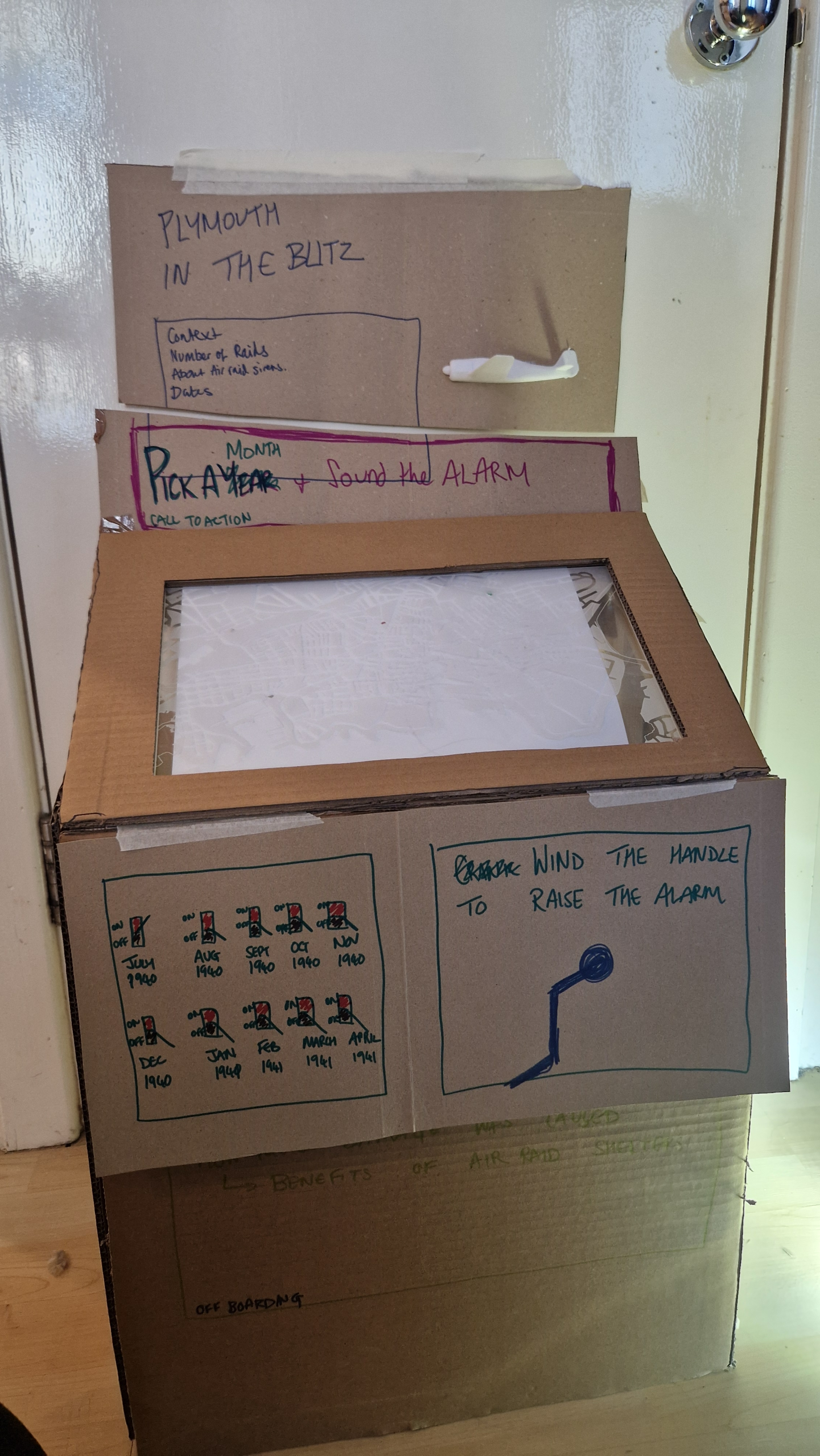
2. hidden data
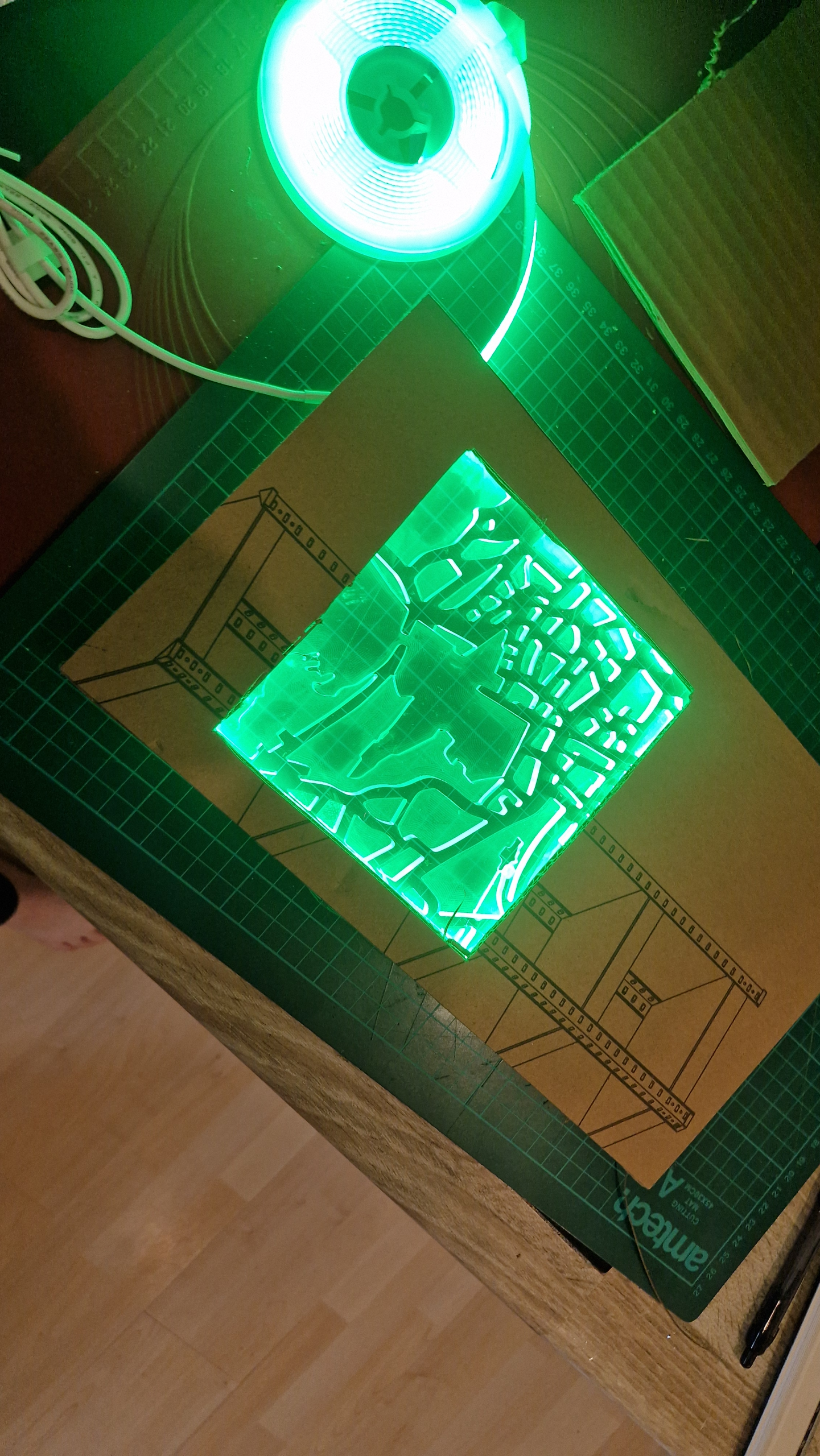
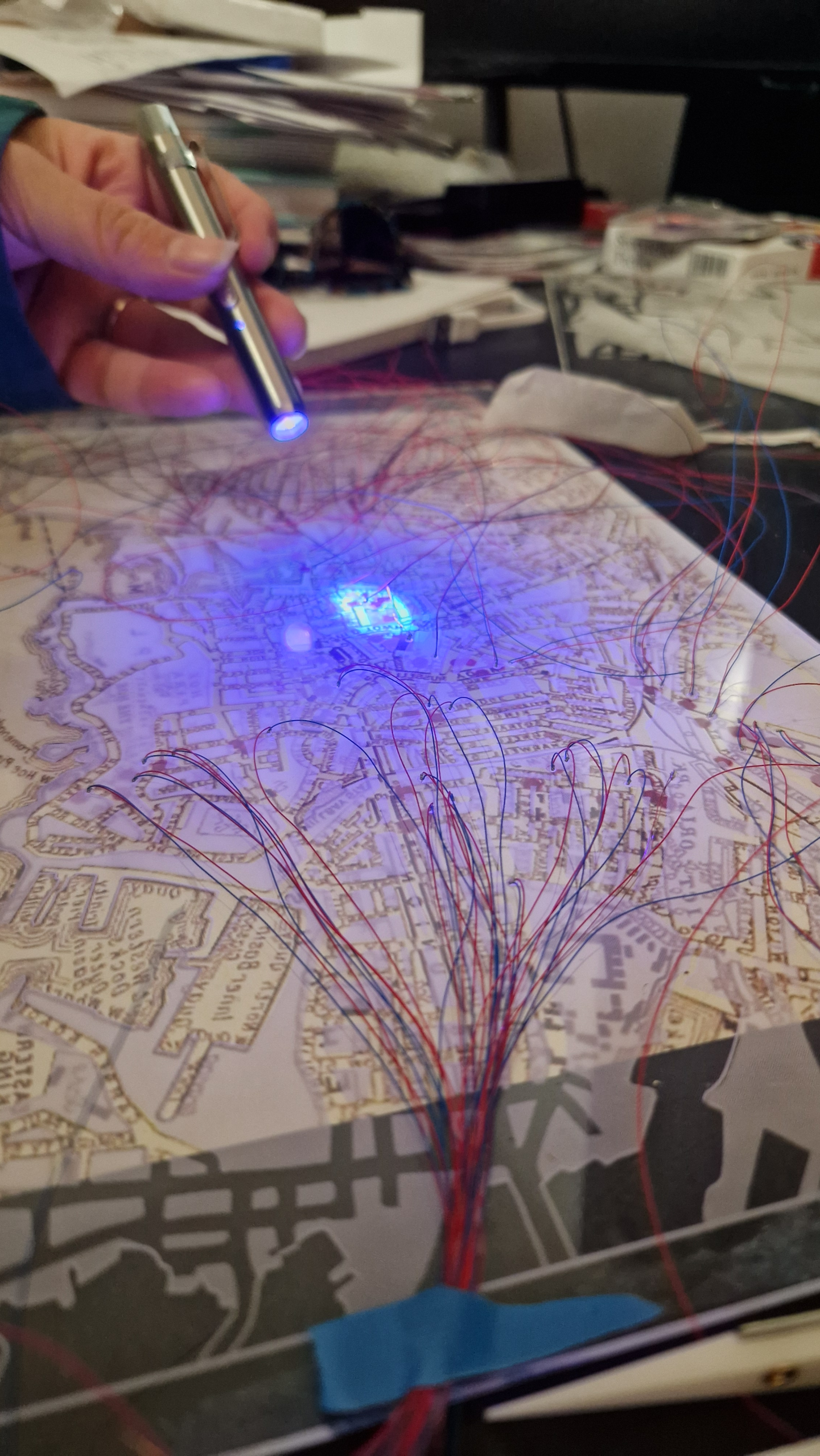
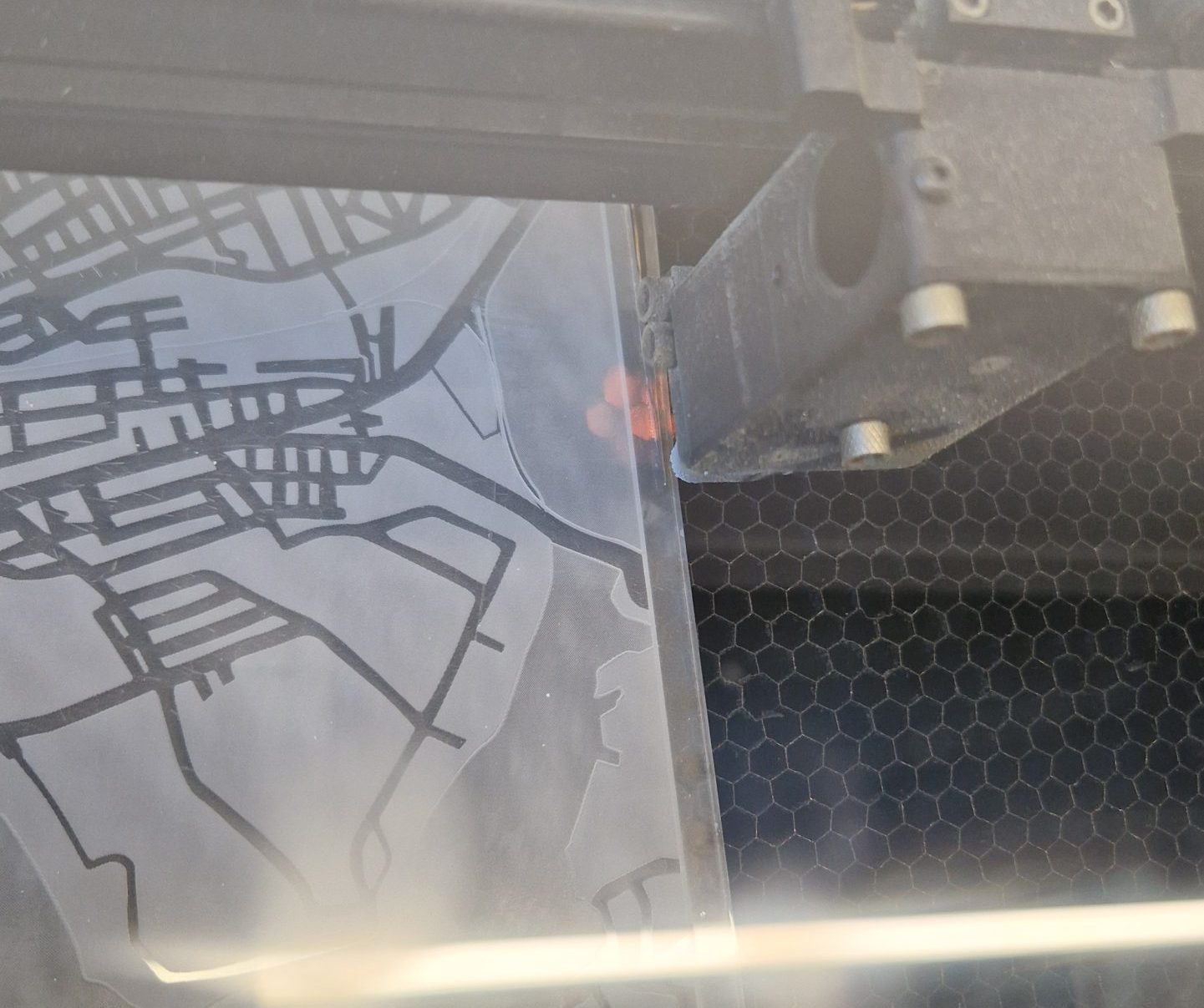
The centrepiece is a laser-etched acrylic panel, cut at varying depths to represent different landmasses, roads and features of the city. LED placement was plotted using reversed printouts of the original map to ensure accurate positioning, with each LED UV-bonded into place by hand. The Map is visible, but it is unclear as to where the bombs may fall or which target is next – a sense of waiting for an event.
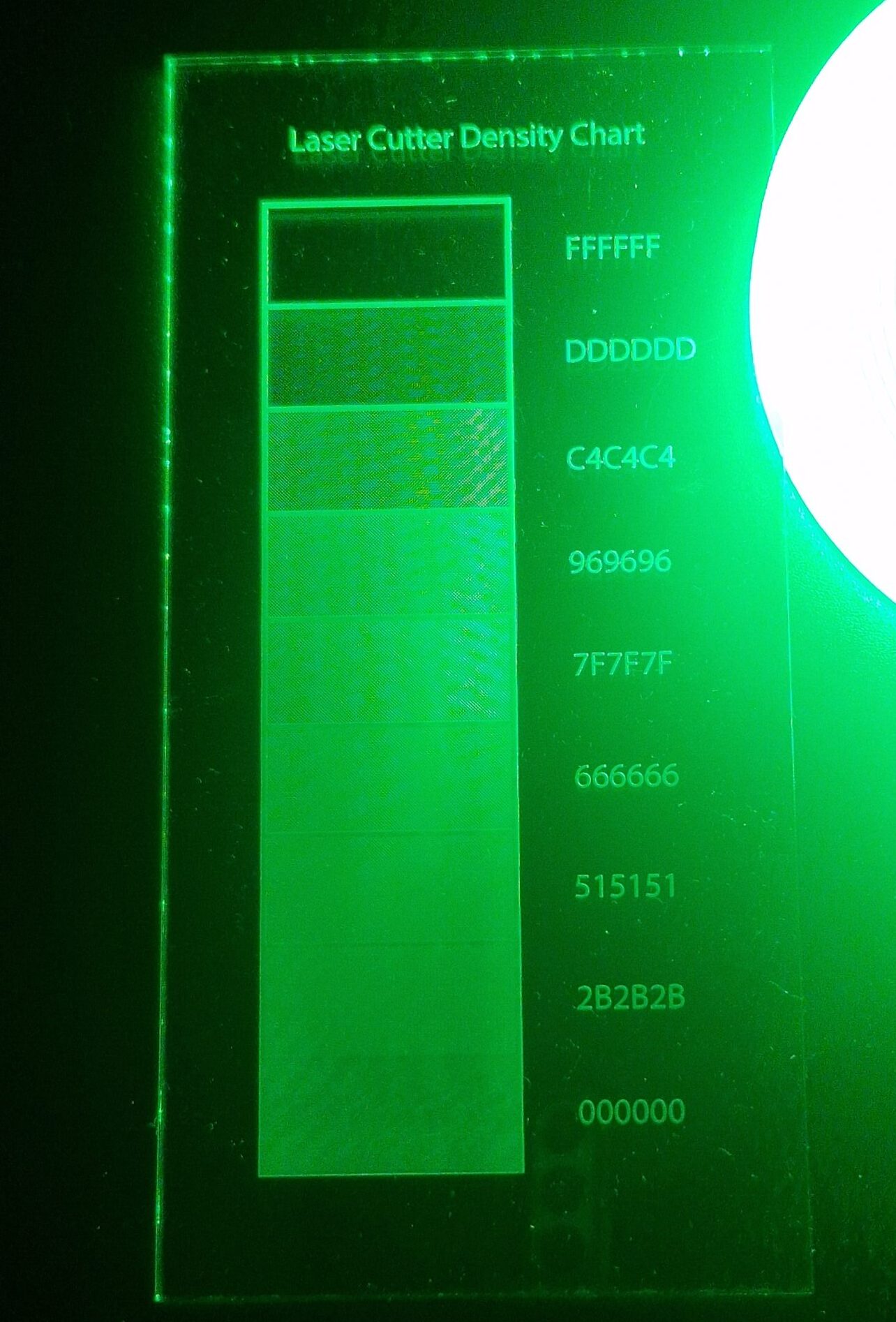
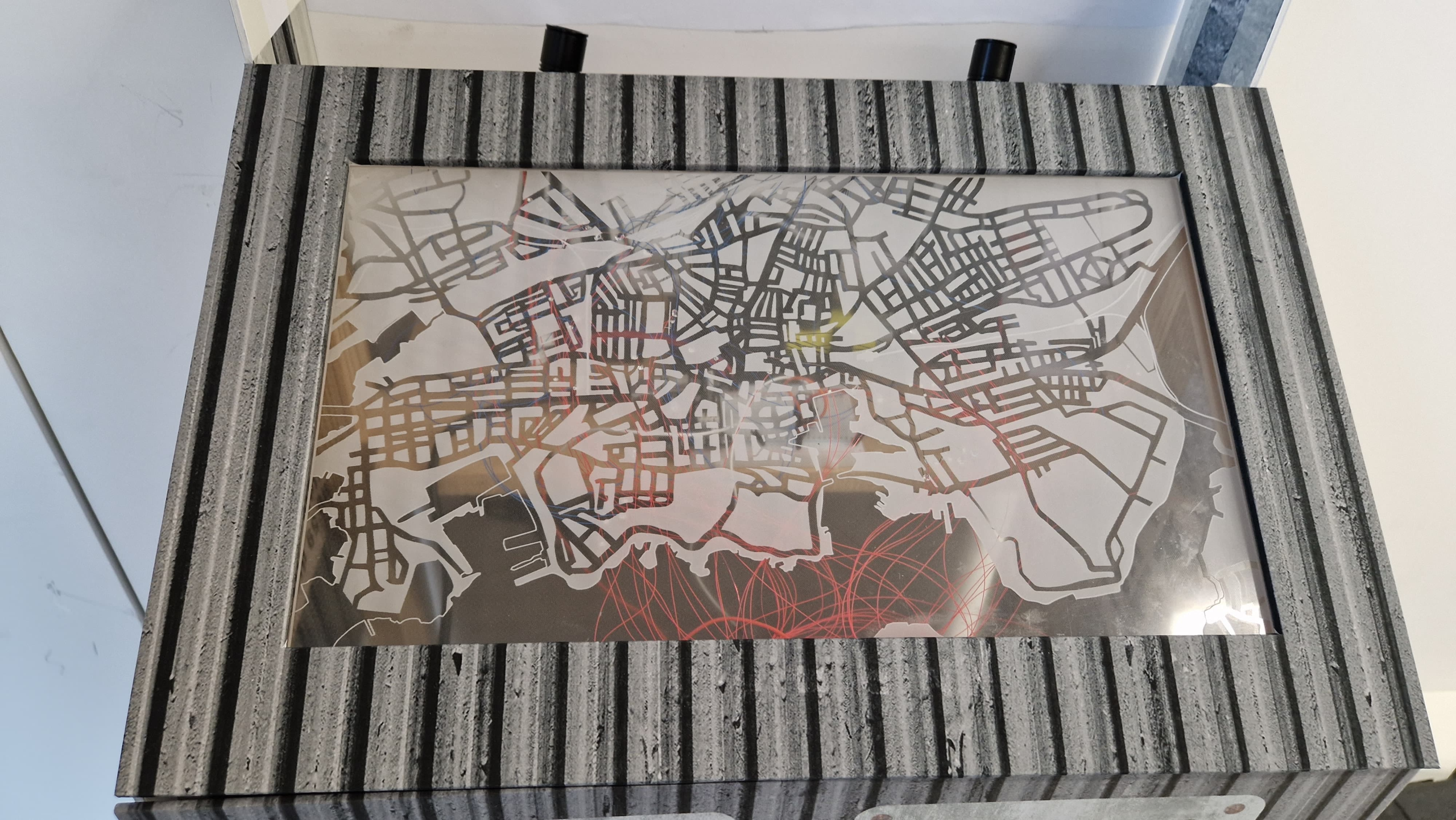
3. The Interaction
Toggle switches wired into a simple binary on/off circuit, styled on the aesthetic of period switchboards. Each toggle corresponds to a date from the raids — tactile, immediate and deliberately analogue in feel and in keeping with the era for a war room feeling.
4. Action Stations
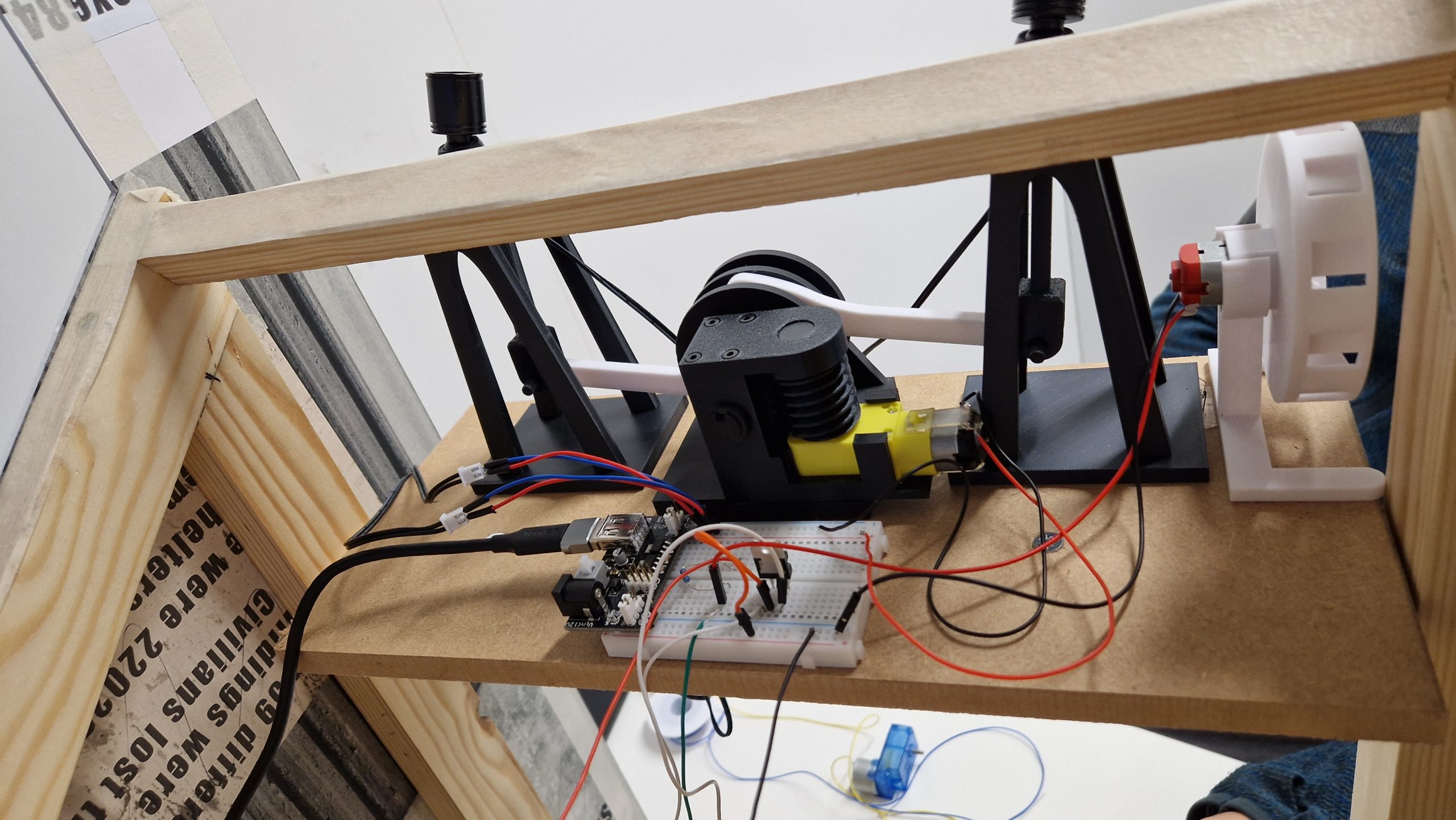
With the planes spotted in the skies overhead, it is time to raise the alarm!
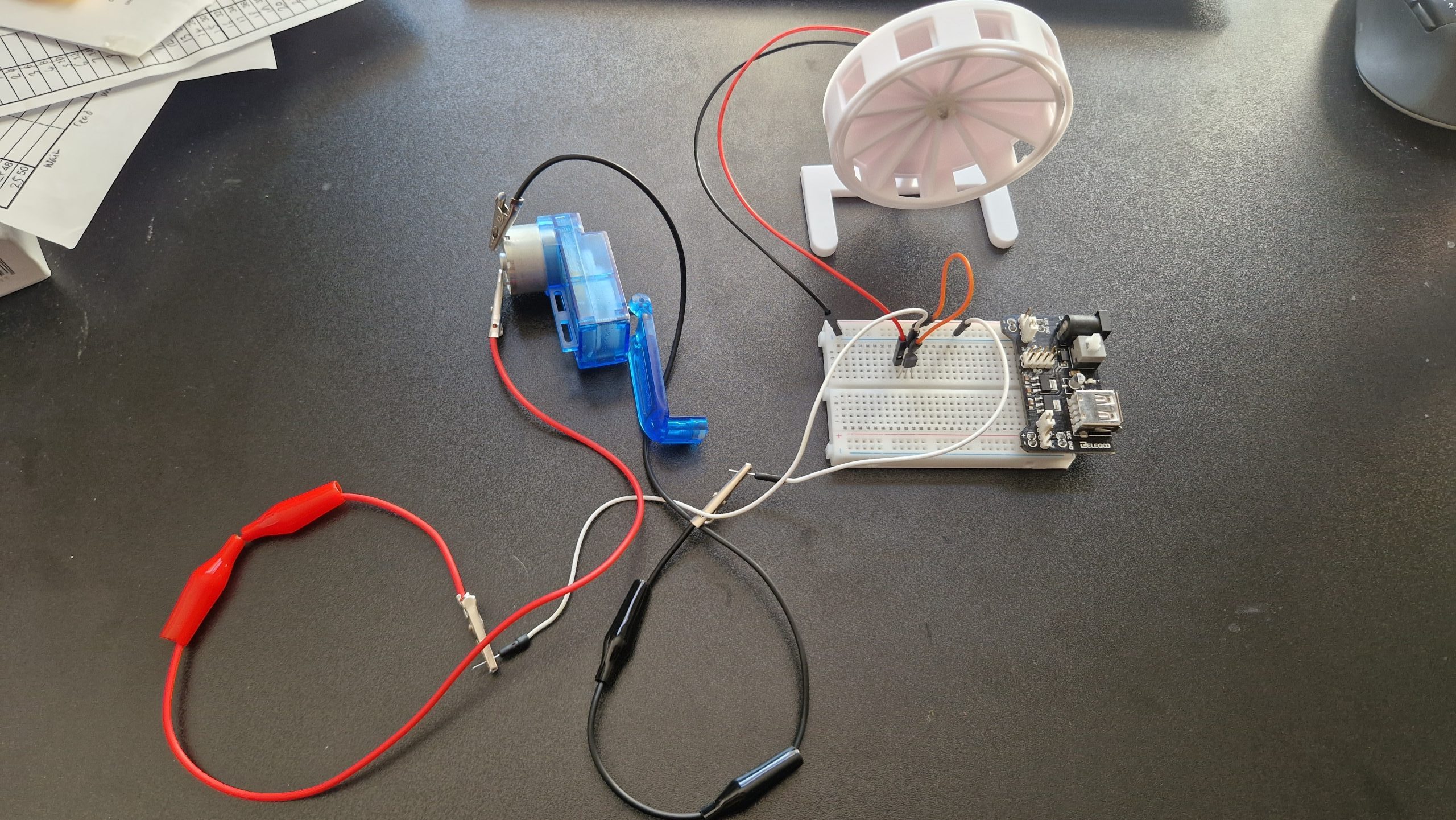
A 3D printed miniature air raid siren with a 3D printed handle. Cranking the handle generates the electrical signal — boosted through a power supply — that activates the LEDs and triggers the siren sound. No Arduino, no NFC — a gate system activated entirely through the physical action of turning the handle.
When the siren sounds, the map lights up. The city takes its hits. The data becomes visceral rather than statistical.
What it proved
Sensory context changes everything. The same data that was being swiped past on a touchscreen becomes genuinely affecting when the body is involved in uncovering it. Empathy isn’t just an emotional response — it can be designed for.
[See the research framework behind this project →]
Gallery of making
Other Projects
Where I lay my Head is My home